Portuguese
  Spanish


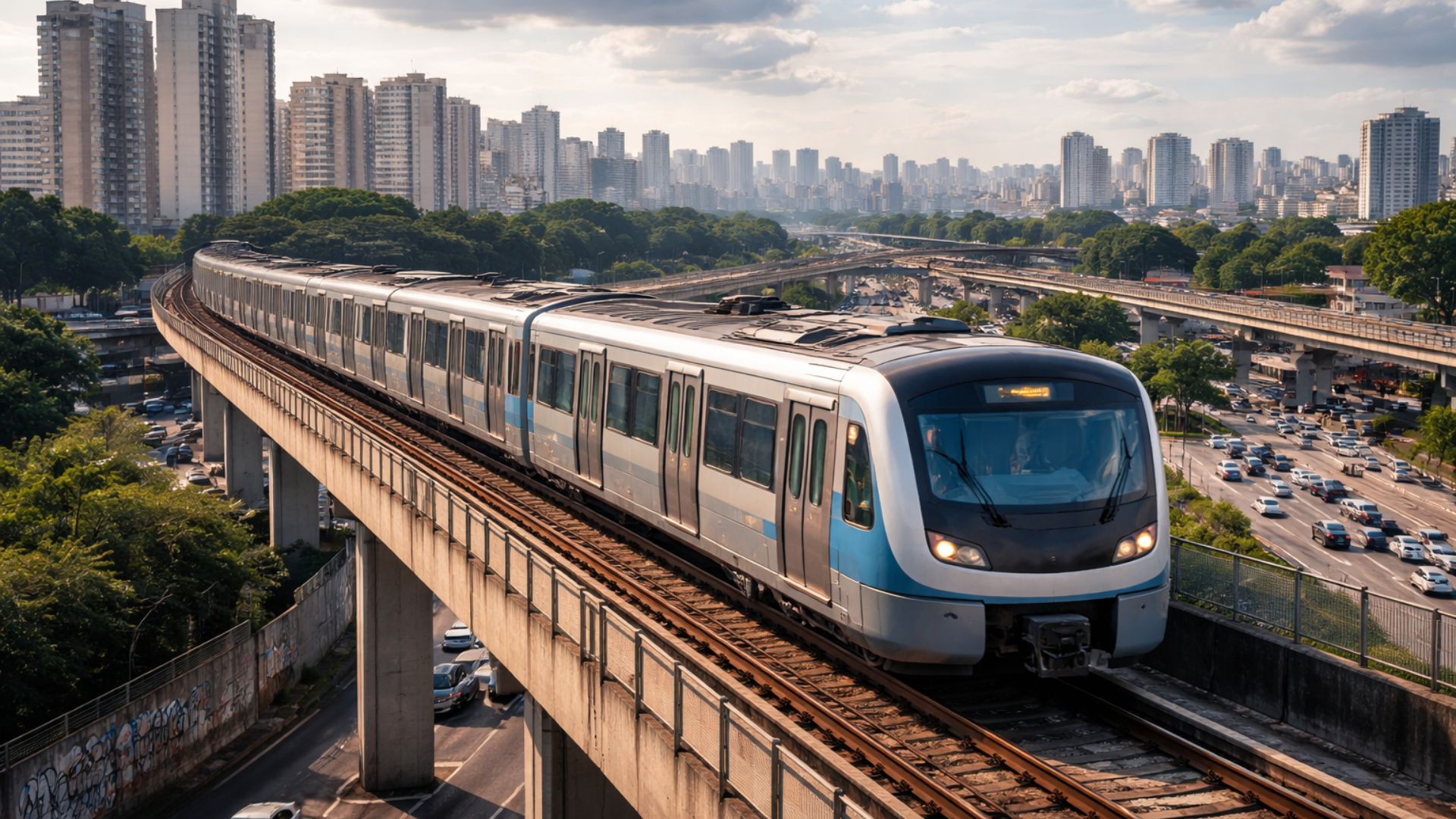


Project Proposes 43 Km Crossline Between ABC Paulista and Embu das Artes, with High Capacity and Reduced Intervals, Creating a New Railway Axis Outside the Expanded Center and Promising to Redistribute Flows in Greater São Paulo.
Greater São Paulo could gain a new corridor over tracks outside the city center, with the Line 25-Topázio designed to connect ABC Paulista to Embu das Artes and redistribute trips currently concentrated on roadways and saturated lines of the metro-rail network.
Referred to as the “Rodoanel dos Trilhos” in materials and reports on the subject, the plan appears as part of studies associated with the state’s railway expansion planning and, according to CPTM itself, is included in planning instruments such as PEF and PITU considered in the project design.
What the Route Intends to Change in Metropolitan Mobility
By connecting municipalities and neighborhoods that today depend mainly on buses, the proposal creates a cross axis, capable of shortening trips that often require passage through the center or very congested road corridors, especially during peak hours in the metropolis.
-
WHO Warns of Unnecessary Interventions in Natural Births Worldwide, Advocates for More Human-Centered Care, Reigniting Debate on Medicalization

-
World War II American Bombs Discovered in German City Prompt Evacuation of 20,500 Residents

-
World’s Largest Ice Cave Extends 42 km Beneath Austrian Alps, Revealing a Vast Frozen Realm Preserved by Natural Air Currents

-
Volcanic Soils from Destructive Eruptions Turn into Million-Dollar Crops: Ashes Nourish Grapes in Lanzarote, Bananas in the Canary Islands, Blood Oranges on Mount Etna, and Cacti in Mexico, Showcasing How Lava-Formed Lands Sustain Rare Harvests in Seemingly Barren Regions




Thus, the line would serve as an alternative for trips between peripheral zones and neighboring cities, reducing the need for long transfers at central stations and offering a direct route for those crossing the metropolitan area without having the central area as a destination.
Line 25-Topázio: Extension, Stations, and Estimated Demand
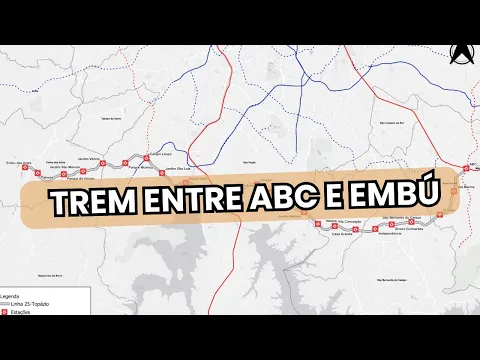
In numbers released in recent publications about the project, Line 25-Topázio appears with 43 km of extension and 25 stations, with estimated demand of 855 thousand passengers per day, a level that would place it among the largest collective transport corridors in the region.
Although estimates vary according to the version analyzed, studies cited in technical documents linked to BNDES have already presented a smaller preliminary design, with about 34.5 km and 21 stations, reinforcing that the route has been revised as planning progresses.
Route Between Santo André, South Zone of SP, and Embu das Artes
According to the route described in reports and presentations about the line, the axis would start from a future connection station in ABC and advance through areas of Santo André and São Bernardo do Campo, before reaching Diadema and proceeding through the south zone of the capital.
Once in São Paulo, the projected path includes neighborhoods and regions such as Jardim Miriam, Cidade Ademar, and Sabará, passing through the Jurubatuba axis for connection with Line 9-Esmeralda, in addition to continuing to Campo Limpo and then crossing towards Embu das Artes.
3-Minute Interval and Integration with Other Lines

The operation is designed, in the maximum scenario described in the studies, to offer a minimum interval of 3 minutes when the set of “ring” projects is operational, which presupposes high capacity, robust infrastructure, and interoperability conditions with the system.
In addition, the connection with already known lines appears as a central piece of the design, with integrations mentioned with lines 5-Lilac, 9-Emerald, 10-Turquoise, as well as planned lines like 14-Onyx and 24-Quartz, expanding routing alternatives.
Heavy Train or VLT: Debate on Operational Model
Although Line 25 is described as a high-capacity metropolitan train in part of the planning, discussions about the type of modal in lines of the same set have appeared in recent reports, involving divergences between government areas about whether to operate as a heavy train or adopt VLT in certain sections.
In these analyses, the type of vehicle and the associated infrastructure are not minor technical details, as they influence capacity, commercial speed, and compatibility of tracks and systems, in addition to affecting the possibility of express services and full integration with the network.
What Phase Is the Rodoanel dos Trilhos Project In?
In the stage described by CPTM in a recent investigation, the project appears to be in the data collection phase of mobility with municipalities and consolidation of information about territory and urban insertion, before advancing to budgetary stages and more detailed projects.
So far, there is no public construction schedule or announced start date, and the available information remains linked to studies and planning versions that may change with new assumptions, route revisions, and definitions of concession and operational models.