Portuguese
  Spanish


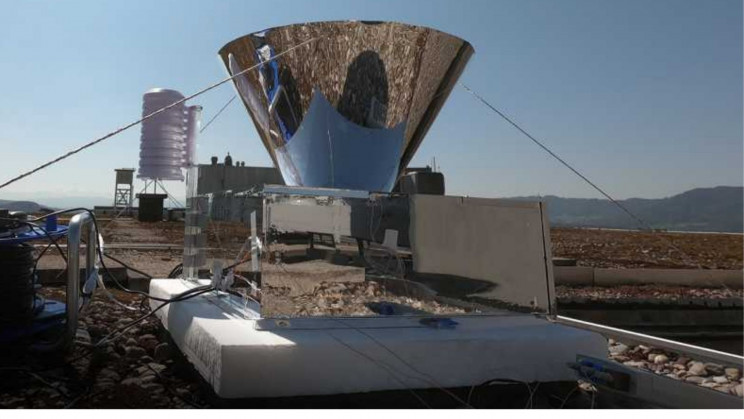

Swiss Researchers Design Device Capable of Condensing Drinking Water 24 Hours a Day Without the Need for Energy
Global warming has harmed the supply of freshwater around the planet. Coastal cities are opting for desalination plants, and the option to extract water from the air is growing worldwide. However, these options are expensive and consume a lot of energy, which means they are used only in certain places. However, researchers from ETH Zurich aim to help communities around the globe generate drinking water 24 hours a day, at low cost and without using energy.
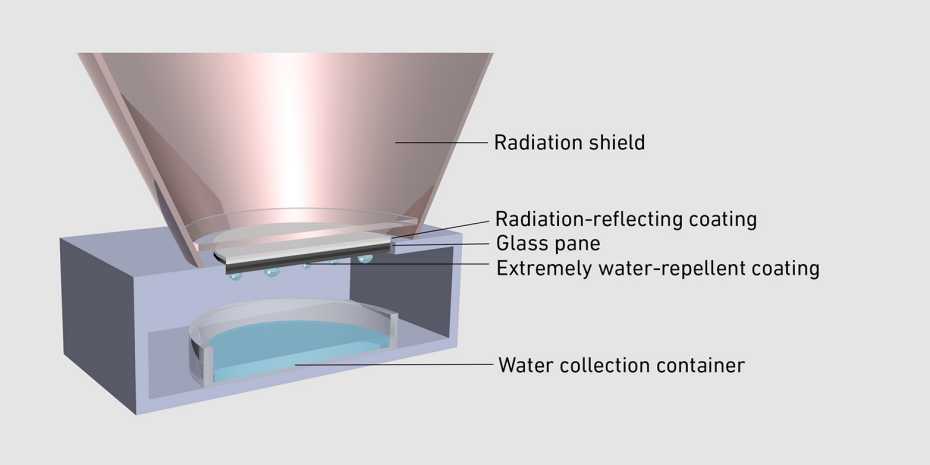
The Swiss device consists of a coated glass panel that promises to reflect the sun’s reaction and also radiates its heat directly into space. Thus, the condensation equipment can stay up to 15 degrees below the ambient temperature. At the bottom of the equipment, the water vapor in the air condenses and generates drinking water.
The specialists coated the glass with a special polymer designed specifically for this purpose, capable of capturing drinking water 24 hours a day without using energy. The coating makes the glass emit infrared radiation in a window. The project also features a radiation shield shaped like a cone to deflect heat radiation.
-
Engie Secures 10-Year Use of 625 MWh in Batteries to Store Excess Solar and Wind Energy in Spain by 2028

-
Giant Batteries Take Center Stage in Chile Auction as Company Offers 960 GWh of Solar Energy for Nighttime Use, Aiming to Stabilize Solar Power Supply
-
After a Year of Success in Switzerland, Solar Railway Attracts Italy’s Interest for Clean Energy Transformation
-
Robots Clean Solar Panels in Desert Power Plants Without Water, Preventing Energy Losses



Ability to Capture Drinking Water Without Energy
The project has the capacity to operate without any energy input. The device can produce up to 0.6 deciliters of water per hour per square meter of panel under optimal conditions: “This is close to the theoretical maximum value of 2.03 ounces (0.6 deciliters) per hour, which is physically impossible to exceed,” highlights Iwan Hanchler, a student at ETH Zurich.
The unique aspect of this project compared to others is that the condensed water needs to be removed from a surface, an action that requires energy. The researchers then applied a hydrophobic coating, allowing the water to drip and be collected.
The idea of the project is to invest in a device that can be used in countries with significant water scarcity, as well as in developing and emerging countries.