Portuguese
  Spanish


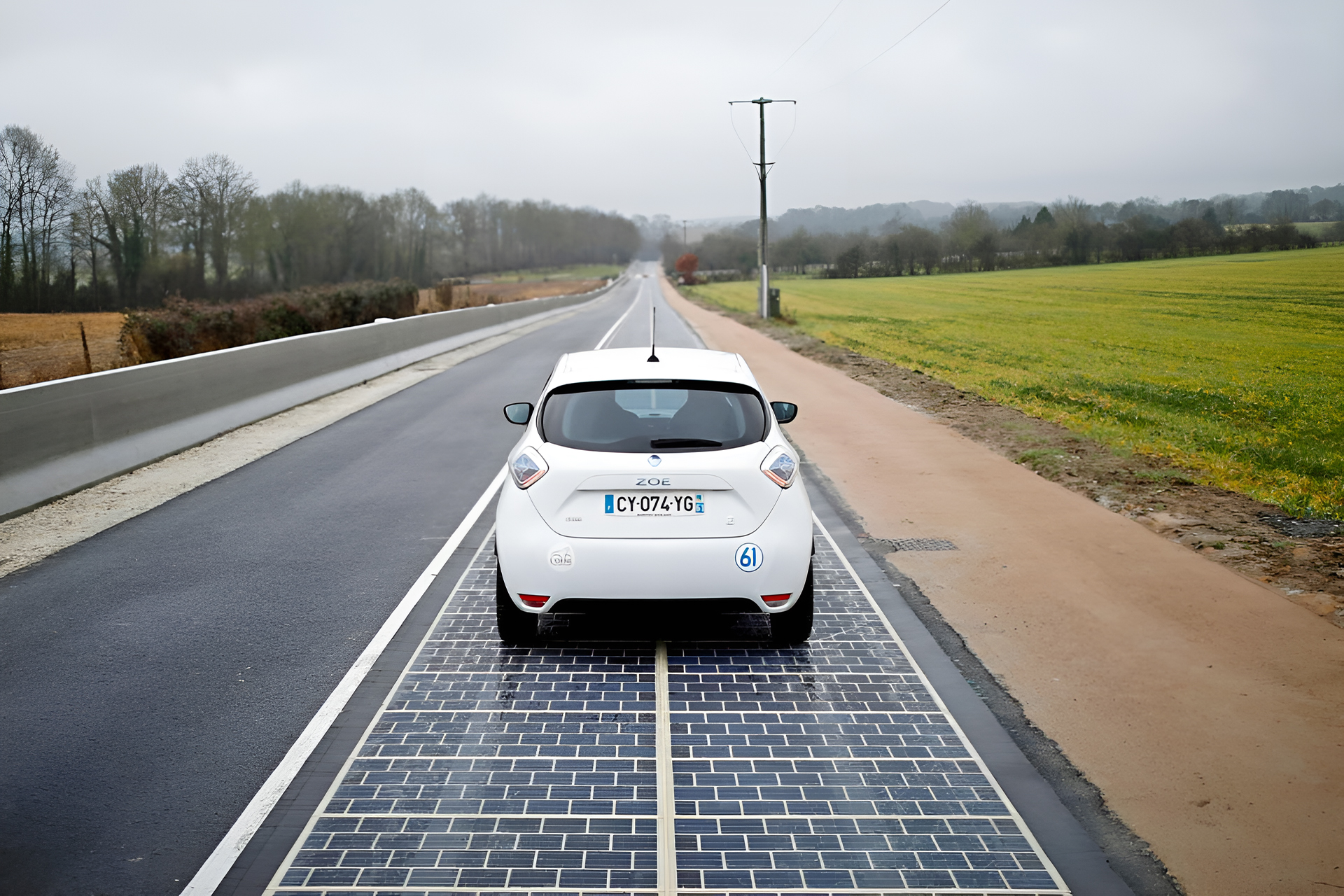


Solar Road Built In Shandong Province, China, Is Responsible For Generating About 1 Million kWh Of Renewable Energy Per Year
When it comes to renewable energy, particularly solar energy, China continues to surpass even its own achievements. In addition to making significant financial investments in this type of energy, China is also the proud owner of the world’s first solar road.
The Chinese Government inaugurated the solar road in the city of Jinan, the capital of Shandong Province, about 3 years ago. A fully covered expressway with photovoltaic panels was built to capture sunlight to create energy.
The stretch of the road received three distinct coverings: transparent concrete on top, which allows light to pass through; solar panels in the center; and insulation on the bottom. According to the state news agency People’s Daily, the solar road in China has a surface area of 5,875 square meters and a length of two kilometers.
-
Brazil Aims to Become a Global Exporter of Green Hydrogen, the Clean Fuel Set to Generate Billions

-
Brazil to Hold First Offshore Wind Energy Auction, Aiming to Become the Country’s New Hydropower
-
Solar Chimney in Spain Harnessed Sun to Generate Electricity for 7 Years Without Burning Fuel

-
Brazil to Hold First Auction for Batteries to Store Solar and Wind Energy from the Northeast


In an interview with Chinese media, a transportation engineering expert from Tongji University named Zhang Hongchao stated that the solar road can withstand ten times the pressure of regular asphalt. Additionally, it generates one million kilowatt-hours (kWh) of energy each year.
The investments from the government for the project amounted to around 3,000 yuan, about R$2,160 in direct conversion, per square meter of roadway. This is significantly more expensive than regular asphalt, which has drawn some criticism of the project, which cost around R$ 12.7 million in total.
The International Energy Agency believes that the growth of renewable energy sources, including solar roads, remains strong in the coming years and forecasts a 43% increase in renewable sources’ capacity in the coming years.
With The Entire Area Of The Solar Road In China Occupied By Photovoltaic Panels, It Can Generate Up To One Million kWh Per Year That Are Used For Public Lighting
The energy generated by the solar road in China will not only be used to power street lights but will also be used to provide electricity for the snow melting system, as well as for electric vehicle charging stations in the country.
According to the latest study on the renewable energy market released by the International Energy Agency (IEA), China accounts for more than half of the total growth in solar energy worldwide.
Countries such as the Netherlands and France have also been testing projects comparable to the Chinese solar road since 2015; these “solar highways” will reshape the future. Just like in China, we may soon see solar roads in various countries around the world.
Brazil has set a new milestone for the amount of installed solar electricity. Last November, the country reached a new installed capacity milestone, achieving the historic mark of 22 gigawatts. This was made possible by adding large-scale plants and solar systems that produced electricity on their own.
Due to this expansion, there is high expectation that solar energy will soon surpass wind energy in installed capacity. This enthusiasm shows that we may soon see more government investment in this renewable energy source. Just as the Chinese government, we may see the Brazilian government investing in projects similar to the solar road in China.