






 Portuguese
  Spanish


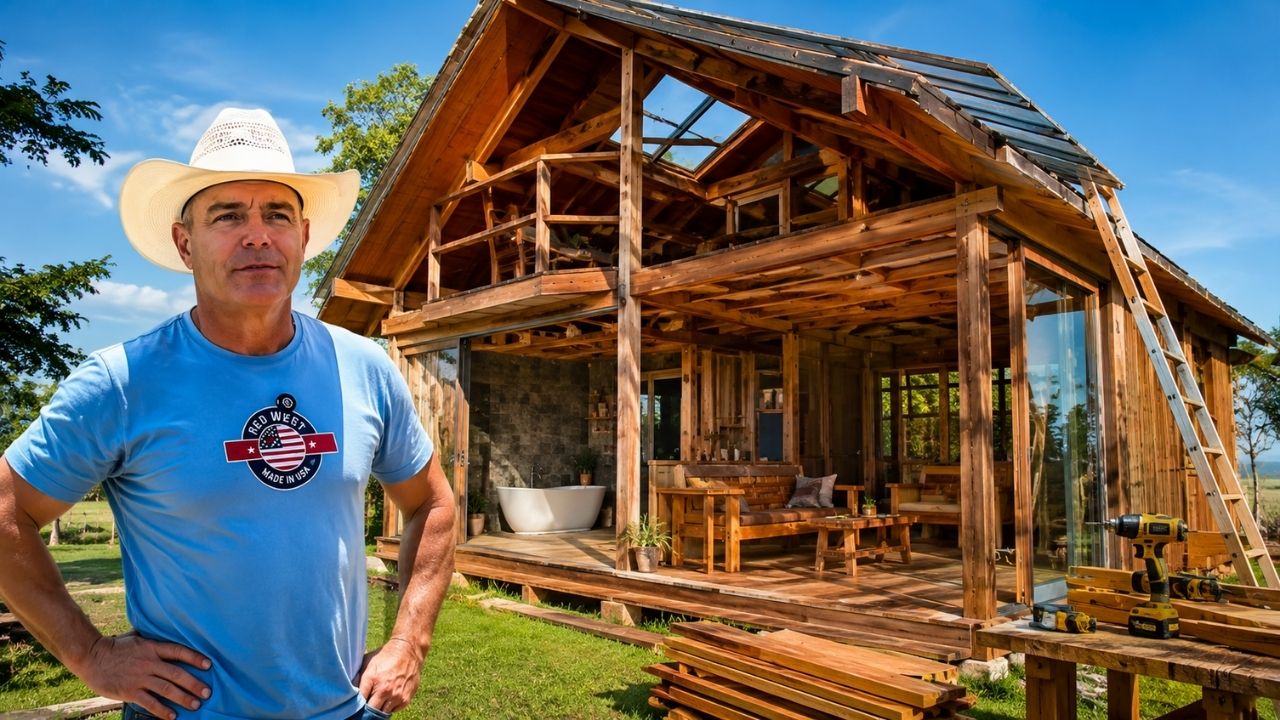

A man identified as Hamilton Miranda, from the YouTube channel Sítio Paraíso, builds a wooden chalet alone in his spare time, using leftovers from the construction itself to make a bed, cabinets, and a dresser. The project is in the third follow-up video and has not yet been completed.
There are projects that first exist in the mind, with every detail imagined before any wood is cut. The wooden chalet that Hamilton Miranda is building at Sítio Paraíso, documented on his YouTube channel, is exactly this type of work. He states that the project existed in his mind for seven years before starting to take shape, and the third video in the series shows where the construction has reached: a structure with a mezzanine, entry deck, side staircase, back porch, kitchen in progress, and a masonry bathroom larger than usual. In practice, Hamilton builds each stage of the chalet alone, in his spare time, without a hired team.
What makes Hamilton’s account relevant beyond the visual result is the constructive logic behind each decision. Almost no piece of wood was wasted: the leftovers from the walls became the kitchen counter, the beams cut in half formed the bed structure, the deck boards were used as the base for the furniture. The Sítio Paraíso channel on YouTube is the source of the information presented in this article, based on the content narrated by the builder himself throughout the chalet’s progress video.
The side staircase and entry deck: decisions with practical reasons
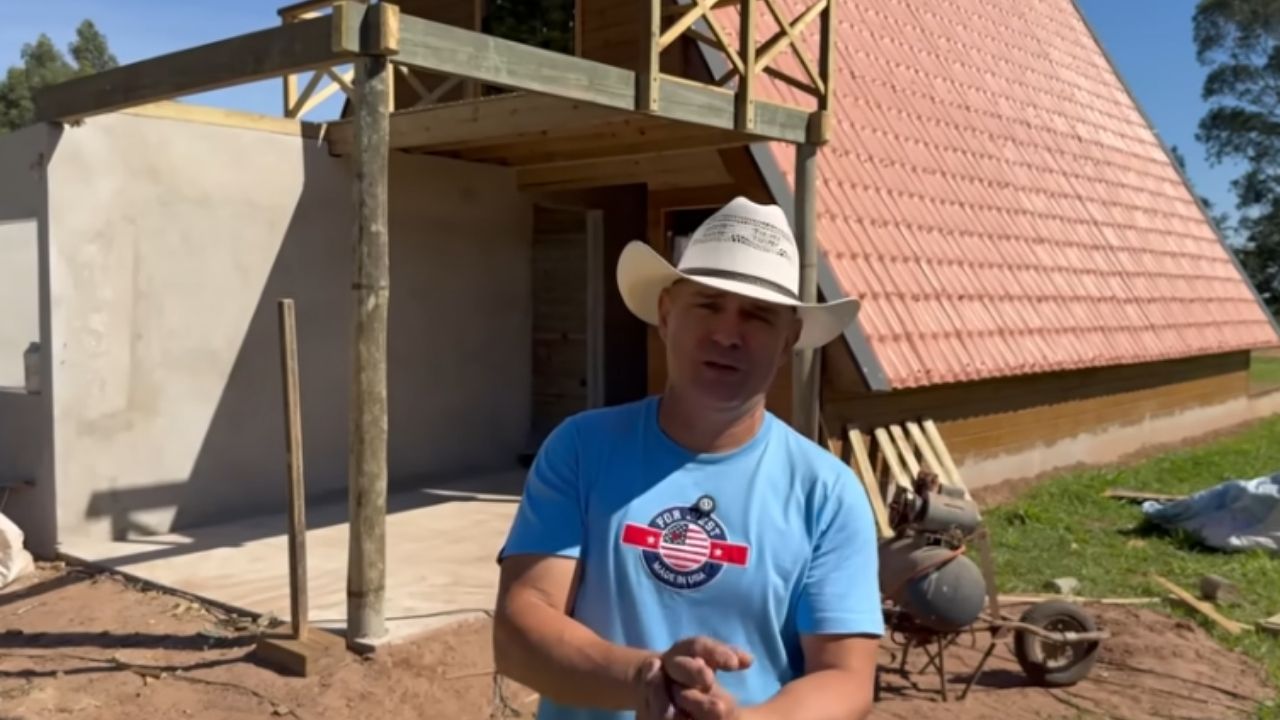
One of the first questions followers asked Hamilton was why the access staircase to the chalet was positioned on the side, rather than centered in front of the door. The answer reveals the logic of someone who designs with a long-term vision: he states that he has future plans for the space in front of the door, not yet revealed in the videos, and that centering the staircase there would make this next stage unfeasible. The decision was not improvised; it was planned to preserve a strategic area.
-
Brazil’s Santa Catarina Port Drives 770 Tons of Steel Piles into the Sea, Reaches Midpoint of $100 Million Project to Dock Two Ships Simultaneously by October

-
Expanded Polystyrene Gains Ground as a Lightweight Alternative to Traditional Masonry in Construction
-
Abandoned Brazilian Coastal Stadium, Once Hosting Major Soccer Matches, to Be Demolished for $10 Million NASCAR-Inspired Racetrack

-
Brazil’s First Immersed Tunnel to Connect Santos and Guarujá in 2 Minutes at a Cost of $1.2 Billion


The entrance deck was another addition compared to the previous video, when the structure did not yet have this element. The chalet’s facade is intentionally facing the sunset, and the back faces the sunrise and moonrise, a choice that drew criticism from followers who suggested reversing the orientation to avoid the afternoon heat. Hamilton explains that the decision was deliberate: the site is narrow, with neighbors on the sides, and reversing the chalet would mean having the tiles facing the best view and the facade facing the neighboring lands.
The glass problem and the solution with architectural film


With the facade oriented towards the afternoon sun, the transparent glass at the front of the chalet created a concrete problem: the heat multiplied by the glass effect damaged the internal flooring, requiring the replacement of some pieces. Hamilton describes that before solving the problem, the heat inside the chalet was noticeable right at the entrance, like a concentrated warmth, while the outside remained without this accumulation.
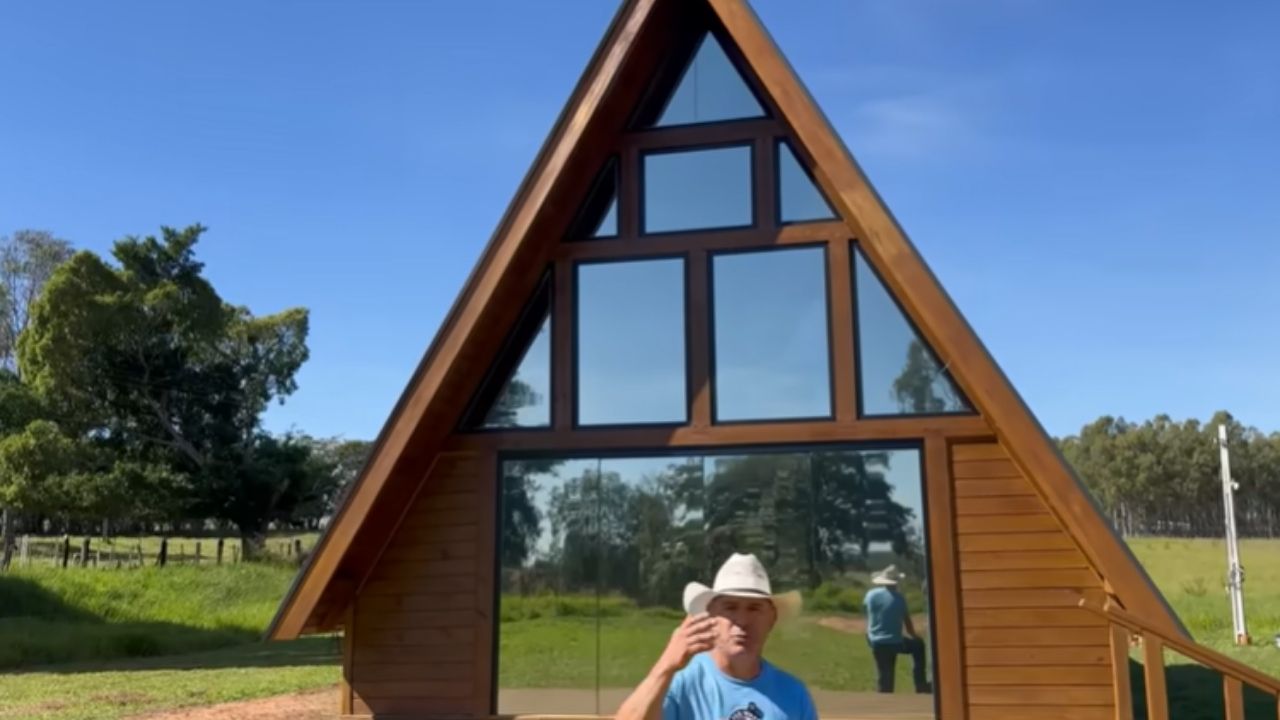
The solution was to seek a specialized company. He mentions Besser Romy, which he describes as the largest architectural film company in Brazil, and was hired to install a film on the facade’s glass. According to Hamilton, the result was immediate: the effect is comparable to moving from direct sunlight to shade, with a significant reduction in internal heat.
The film gave the facade a mirrored finish, a result he claims to have liked, although he acknowledges that not everyone shares this preference. A technical detail mentioned: glass with mirrored film reduces the incidence of birds compared to transparent glass, because birds do not see themselves in the reflection and do not attempt to cross.
The kitchen, the German corner, and the use of every centimeter
On the ground floor, the kitchen is being built with an L-shaped counter, built-in cooktop, centralized sink, and cabinets made with the chalet’s own wood. Hamilton used beams cut in half with a circular saw to assemble the cabinet structure, and highlights that almost all the open space shown in the video corresponds to cabinet doors not yet installed, except for a drawer unit.
The space under the stairs was also utilized: a door was installed creating a generously sized closet, capable of storing cement and mortar during the construction. For the dining area, Hamilton adopted the suggestion of his daughter-in-law Vitória, an architect, to create a German corner, an L-shaped bench fixed to the wall, with a table approximately 1.5 meters and chairs on the opposite side. The bench will be built as a chest, with a seat that opens to store objects, further increasing the storage capacity of the chalet without taking up additional space.
The mezzanine, the bed, and the furniture made from leftover materials
Going up the stairs, which Hamilton describes as challenging to calculate but satisfying in the result, with angled steps to accommodate the curve of the ascent, the mezzanine houses the chalet’s bedroom. The bed was built with wood from the construction itself: the base uses the same 15 by 15 centimeter beams from the chalet’s structure, and the headboard chest was made with boards from the walls. A separate video on the Sítio Paraíso channel shows in detail how the bed was built from start to finish.
On the opposite side of the bed, Hamilton built a dresser and a wardrobe with the same wood, a necessity imposed by the chalet’s design, which has a roof slope incompatible with standard-sized furniture.
The wardrobe is narrow at the top and wider at the base, adapted to the available space. Sanding, varnishing, and electrical installation are still needed to finish the mezzanine. At the back of the room, a balcony with a railing is already completed, facing the sunrise and moonrise, with plans for a suspended hammock on the beams and two chairs for nighttime use.
The bathroom larger than expected and the challenges of the retractable roof
The only part of the chalet built in masonry is the bathroom, located on the ground floor at the back. Hamilton explains the decision: the wet area with showers could not be made of wood without causing long-term structural problems. The bathroom was intentionally designed to be large, with two showers, a whirlpool bathtub with pebbles on the surrounding floor, installed pipes, and a dry area separated by a glass box that opens in the middle.
The most ambitious element of the bathroom is the retractable roof: Hamilton wants to open half of the roof to see the sky at night and close it when protection is needed. He admits not having found a Brazilian supplier for this type of product and is seeking partner companies or will try to build the solution on his own.
The same challenge exists on the mezzanine, where he plans a balcony window, a type of opening that would allow the user to project outside and see the stars. Both elements still do not have a defined solution, and Hamilton leaves the invitation open for companies that work with these products to get in touch through the channel.
Seven years of planning, work done in spare hours, furniture built from leftovers, and solutions invented for each problem that arises, this is the chalet of Sítio Paraíso, where Hamilton is building a project alone that is still far from finished.


