





 Portuguese
  English
  Spanish
 2 min of reading


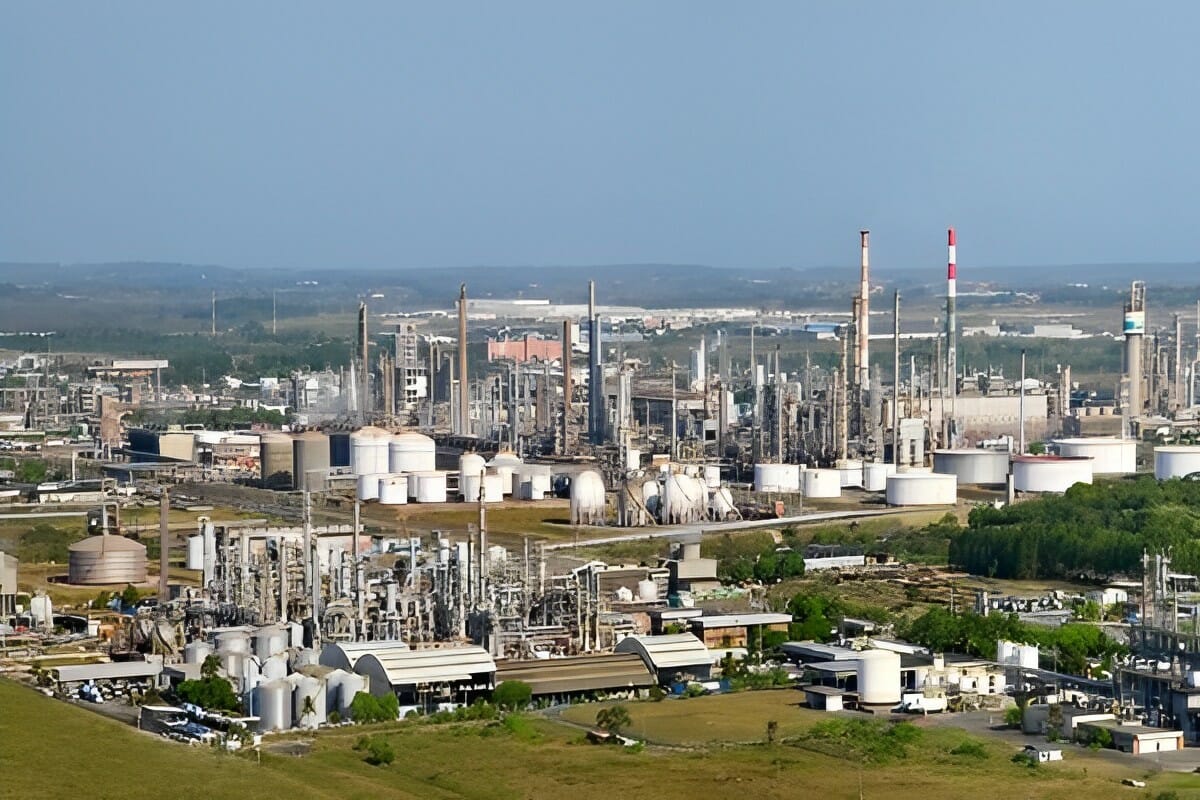
The Petrochemical Pole of Camaçari, located in Bahia, plays an essential role in the national chemical industry. In this context, Unigel, a leader in the nitrogen fertilizers sector, recently resumed the production of 40 thousand tons of automotive urea at the pole’s factory.
This resumption occurred due to the significant demand from customers and aims to ensure market supply. The automotive urea is an essential input for the production of ARLA 32, a chemical reagent that is mandatory for vehicles with diesel engines, which plays a crucial role in the reduction of greenhouse gas emissions.
Automotive Urea and Its Importance for ARLA 32
Automotive urea, also known as high-purity urea, is a fundamental component in the production of ARLA 32. Unigel is the only national producer of this type of urea, and therefore, supplying the market becomes a priority of significant environmental and logistical relevance.
ARLA 32 is a reagent used in vehicles with diesel engines and its main function is to reduce emissions of polluting gases. By using this reagent, it is possible to achieve a reduction of up to 60% in greenhouse gas emissions and 80% in particulate matter emissions.
-
There is oil below the oil that Brazil already extracts: Petrobras confirmed a new accumulation in the Búzios field, at a depth of 5,600 meters, in a zone below the reservoir already operating in the Santos Basin.

-
404 km off the coast of Rio de Janeiro, an oil company drilled 5,855 meters into the ocean and discovered the largest oil and gas reserve found in a quarter of a century.
-
Coca-Cola prepares a mega-operation in Brazil with 11 factories and 53 distribution centers to turn the 2026 World Cup into a billion-dollar consumption race.

-
Electrolux emerged from a Swedish merger in 1919 and conquered homes worldwide with innovative refrigerators, stoves, and washing machines.


Unigel’s Environmental Commitment
Unigel, aware of its environmental responsibility, has increasingly sought to incorporate sustainability into its business models. The production and supply of automotive urea highlight this commitment, as they directly contribute to the reduction of pollutant emissions.
Furthermore, the use of ARLA 32 in compliance with current regulations is an obligation imposed by PROCONVE (Program for Control of Air Pollution from Motor Vehicles), which establishes guidelines for controlling pollution caused by motor vehicles.
Advances in Regulations
In 2023, the National Environmental Council established even more stringent norms for the use of ARLA 32. All diesel-engine vehicles manufactured from January of this year must be equipped with SCR (Selective Catalytic Reduction) technology.
This technology requires an increase in ARLA consumption, which rises from 3-4% to between 5-7% in relation to the diesel fuel used. The implementation of these new requirements was fully supported by ABRAPA 32 (Brazilian Association of ARLA 32 Producers) and the market in general.
National Priority
The resumption of automotive urea production at the Petrochemical Pole of Camaçari is of extreme importance for the functioning of the country, as more than 60% of Brazil’s transportation matrix is composed of road vehicles.
Therefore, supplying this critical input is a national priority aimed at ensuring the continuity of transportation sector activities while significantly reducing greenhouse gas emissions.








Be the first to react!