






 Portuguese
  Spanish


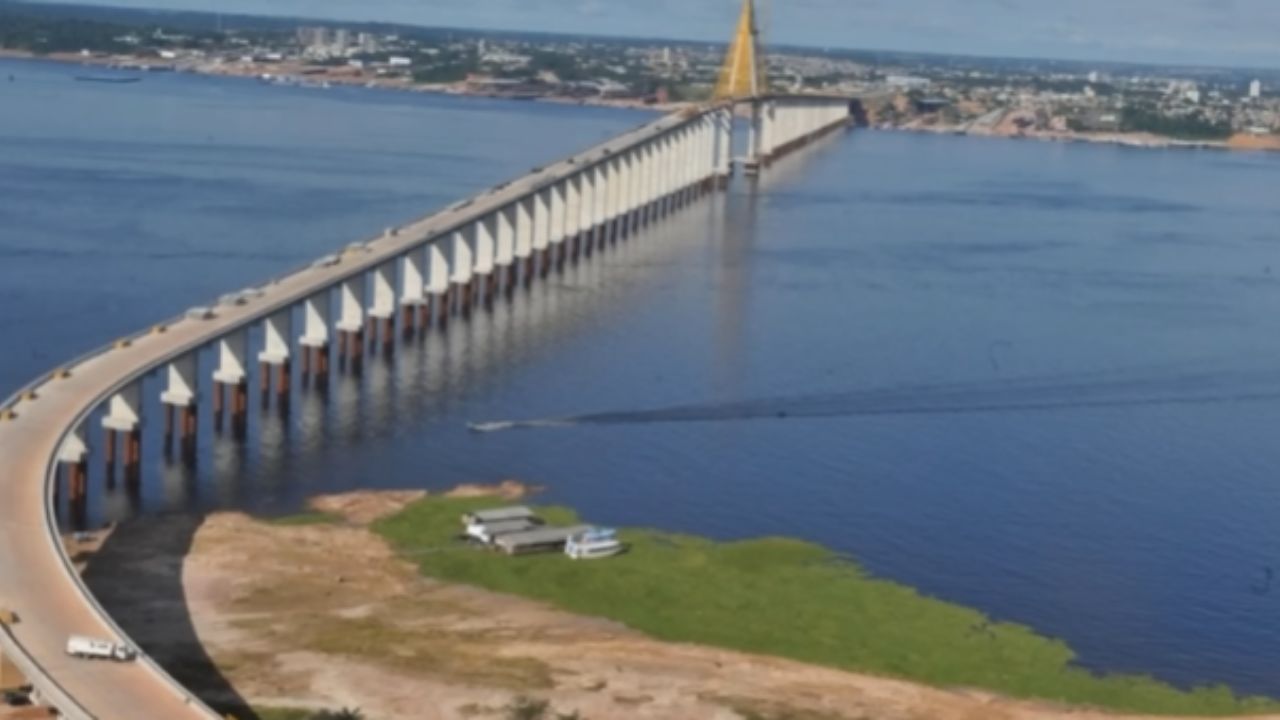


Monumental 3.5 Km Structure Eliminated Ferry Dependence, But Faced Extreme Technical Challenges and Doubled in Cost; Know the Details of the Hanging Bridge in Manaus.
Inaugurated on October 24, 2011, the hanging bridge in Manaus, officially known as the Rio Negro Bridge, represents a watershed moment in Amazonas’ infrastructure. According to detailed data provided by Canal Estruturas & BIM Eng. Pedro, the structure connects the Compensa neighborhood in the western part of the capital to the Manoel Urbano Highway (AM-070) in Iranduba, with the central goal of eliminating the historic dependence on ferry transport to neighboring cities and boosting regional development.
The project, however, carries superlative numbers and a history of engineering challenges. The construction of the hanging bridge in Manaus required unprecedented solutions to cope with the acidic waters of the Rio Negro and soil depths that pushed machinery to the limit. What started with a budget of half a billion reais transformed into an undertaking of over R$ 1 billion, generating debates about costs and benefits that continue to this day.
From Popular Project to Complex Engineering
The conception of the bridge did not arise solely in offices; it had strong popular appeal. According to a survey by Canal Estruturas & BIM Eng. Pedro, the proposal was presented to the Amazonas Legislative Assembly in 2003. To validate the need for the project, a signature collection was conducted at the Port of São Raimundo. In about six months, 120,000 signatures were gathered from citizens demanding a connection between the capital and the interior.
-
Engineering Feat in Brazil: 6.4 km Tunnel and Powerful Pumps Overcome 200-Meter Elevation to Save São Paulo’s Cantareira Water System

-
Engineering Students Build Off-Grid Tiny Home with Sustainable Features and Offer Free DIY Guide
-
Historic Brazilian Championship Stadium Demolished for New Supermarket and Shopping Center Development

-
Workers excavate one of the world’s longest railway tunnels beneath the Alps between France and Italy, stretching nearly 60 km, 600 meters deep, with an investment of 11 billion euros.


After several hearings and the maturation of the project, the work order was released in December 2007, with actual construction starting in 2008. The Consórcio Rio Negro, formed by the construction companies Camargo Corrêa and Construbase, took on the mission. The first major challenge was to investigate what nature had in store at the riverbed. In-depth studies of bathymetry and soil resistance were required to design foundations capable of withstanding both the current and the weight of the structure.
Technical Challenges: Record Floods and Deep Soil
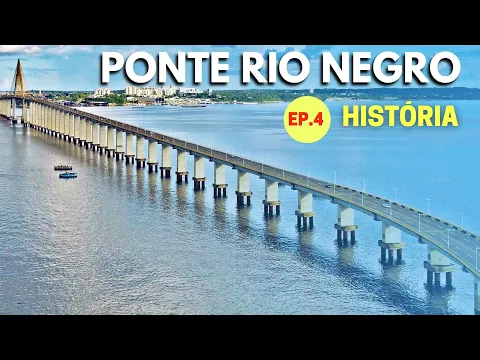

The execution of the hanging bridge in Manaus was an open-air engineering laboratory. One of the critical points highlighted by the source was the acidity of the waters of the Rio Negro. To avoid premature corrosion, the team used pozzolana in the concrete mix, ensuring greater durability for the piles and decks. Furthermore, logistics required the creation of two concrete plants on-site, each capable of producing 80 cubic meters per hour, optimizing costs and timelines.
The year 2009 brought an unplanned obstacle: the Rio Negro reached a record flood level. This complicated the formwork of the foundation blocks, forcing engineers to innovate with the “shell block” technique, which allowed work to continue even with elevated water levels. The soil also presented geological surprises, with variable rock thicknesses. Some excavated piles required drilling of up to 91 meters deep, a point at which the machines reached their maximum operational limit.
The Grandeur of the Numbers and the “Diamond” Structure
The technical data of the hanging bridge in Manaus impress with its volume. The structure has a total length of 3,595 meters. The stayed section, which is the postcard of the work, comprises 400 meters (two spans of 200 meters on each side of the central mast). The mast, with its aerodynamic shape resembling a diamond to reduce wind friction, rises 103.3 meters above the deck.
To raise this giant, 160,395 cubic meters of concrete were consumed. According to the source Canal Estruturas & BIM Eng. Pedro, the amount of steel and concrete used would be enough to build three Maracanã stadiums. The project involved over 2,500 workers and operated simultaneously at 25 floating construction sites on the river. The height of the central span above the water reaches 55 meters, allowing safe navigation beneath the bridge.
Billion-Dollar Budget and Name Change
The financial aspect is a crucial part of the story of the hanging bridge in Manaus. The initial projected budget was R$ 506 million. However, necessary contract addendums for new fronts of work, such as the protection of the pylons, modern nautical signaling, and lighting, raised the final cost to approximately R$ 1.099 billion.
The inauguration took place on the anniversary of 342 years of Manaus, with the presence of federal and state authorities. Years later, in 2017, a state decree changed the official name of the structure to honor journalist Felipe Daou, recognized for his role in advocating for the interests of the Amazon through his work in regional media.
Today, the bridge operates with four traffic lanes (two in each direction) and a permitted speed of 60 km/h, in addition to a pedestrian lane. The impact on development is visible in the expansion of industry, tourism, and commerce in the cities of Iranduba and Novo Airão, fulfilling its initial goal of integration, despite controversies regarding its final cost.
Do you agree with this change? Do you think that the investment of R$ 1 billion compensated for the end of the ferries and the development generated, or did the costs outweigh the benefits? Leave your opinion in the comments; we want to hear from those who live this reality firsthand.






Se uma obra dessas é feita no sudeste, tudo bem, mas como é no norte, aí vem os chorões
Valeu a pena com certeza, moro no Iranduba e passei até 8 horas na fila para entrar na balsa, era um sacrifício. E para os produtores rurais foi um investimento com muita vantagem.
Acredito que o investimento valeu a pena, pois as balsas só traziam atrasos, além de serem balsas sucateadas que não ofereciam um serviço descente aos usuários.