Portuguese
  Spanish



An Analysis of Brazilian Highways Revealed Which State Has the Most Dangerous Roads in the Country
The annual report from the National Transport Confederation (CNT) brought alarming data about the situation of Brazilian highways. After analyzing 111,853 km across the country, the survey revealed that 67% of the roads are in inadequate conditions, classified as regular, poor, or terrible. See below the most dangerous highway in Brazil.
General Conditions of Highways
The study classified the highways into five categories: excellent (7.5%), good (25.5%), regular (40.4%), poor (20.8%), and terrible (5.8%).
The assessment was based on three main factors: pavement, signage, and road geometry. The data reinforces that the precariousness of the roads compromises both safety and transportation efficiency.
-
Sales of Brazil’s Cheapest Electric Car Halted Before First Deliveries: E-Motors Suspends Emova Easy Due to Import Tax Increase and Rising Freight Costs

-
Nissan Discontinues Qashqai SUV Amid Cost-Cutting, Chinese Competition, and Product Line Review

-
BYD Patents Revolutionary System Using Computer Vision to Detect Animals Under Cars Before Starting, Preventing Tragedies

-
Study Reveals Why Cars Are More Expensive to Produce and Buy in Brazil Compared to Mexico, Highlighting Taxes, Logistics, and Industrial Costs as Key Factors.





Impacts of Poor Maintenance
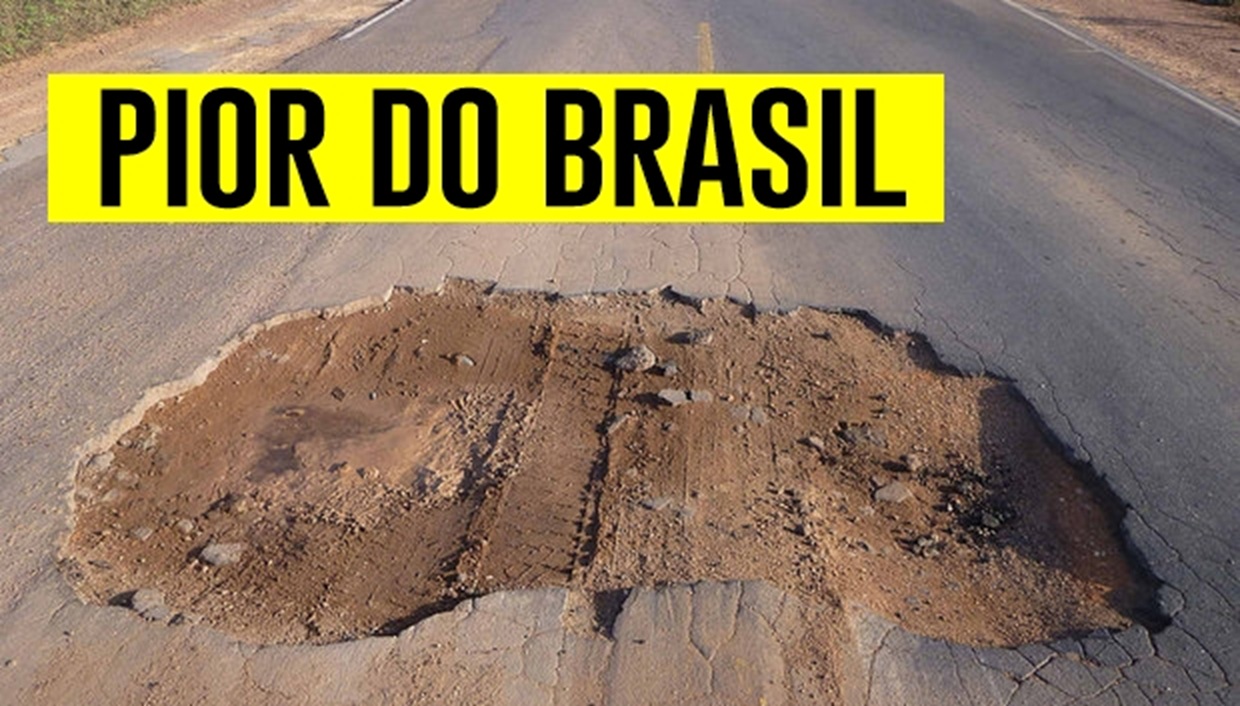
According to the CNT, sections in poor or terrible conditions present serious problems, such as worn-out pavement, potholes, and undulations. These failures increase the risk of accidents, hinder traffic, and impose extra costs on drivers.
“The precarious condition of highway surfaces is a determining factor for vehicle instability. This can cause sudden changes in direction and loss of control, resulting in collisions and other accidents,” emphasizes the report.
States with the Worst Highways
Autoesporte compiled the data and pointed out the ten states with the highest proportion of highways classified as terrible. Amazonas tops the ranking, with 38.6% of its roads in this category. Check out the complete list:
10th Place: Tocantins
- Poor: 7.6%
- Total assessed: 3,569 km
Tocantins presents significant problems in 273 km of highways, compromising traffic in strategic regions.
9th Place: Minas Gerais
- Poor: 7.8%
- Total assessed: 15,589 km
Although one of the states with the largest road extensions, Minas Gerais faces difficulties in maintaining the quality of important stretches.
8th Place: Paraíba
- Poor: 9.8%
- Total assessed: 1,784 km
With almost 10% of the highways in critical conditions, Paraíba faces challenges in mobility.
7th Place: Pernambuco
- Poor: 12.1%
- Total assessed: 3,189 km
The state has 386 km of highways in terrible conditions, directly affecting interstate traffic.
6th Place: Maranhão
- Poor: 13.4%
- Total assessed: 4,726 km
In Maranhão, 633 km of roads are deteriorated, hindering local and regional transport.
5th Place: Rio Grande do Norte
- Poor: 17.3%
- Total assessed: 1,881 km
The state has one of the highest rates of terrible highways, with 325 km in this classification.
4th Place: Roraima
- Poor: 18.3%
- Total assessed: 1,165 km
With 213 km in terrible conditions, Roraima faces severe challenges in road infrastructure.
3rd Place: Amapá
- Poor: 20.1%
- Total assessed: 546 km
Despite the smallest assessed extension, the state has a high concentration of problems on its roads.
2nd Place: Acre
- Poor: 33.2%
- Total assessed: 1,347 km
Acre has more than a third of its highways in terrible conditions, hindering regional traffic.
1st Place: Amazonas
- Poor: 38.6%
- Total assessed: 1,030 km
Amazonas leads the ranking with nearly 40% of its roads in critical condition, severely impacting logistics in the region.
The poor quality of Brazilian highways not only increases transportation costs but also affects the safety of drivers and passengers. Additionally, it hampers the flow of agricultural and industrial products, compromising the country’s competitiveness.
The CNT report exposes a structural challenge that requires urgent attention to Brazil’s highways. Consistent investments in maintenance and modernization are crucial to reversing this scenario, promoting a more efficient and safe transportation system for all.