Portuguese
  Spanish


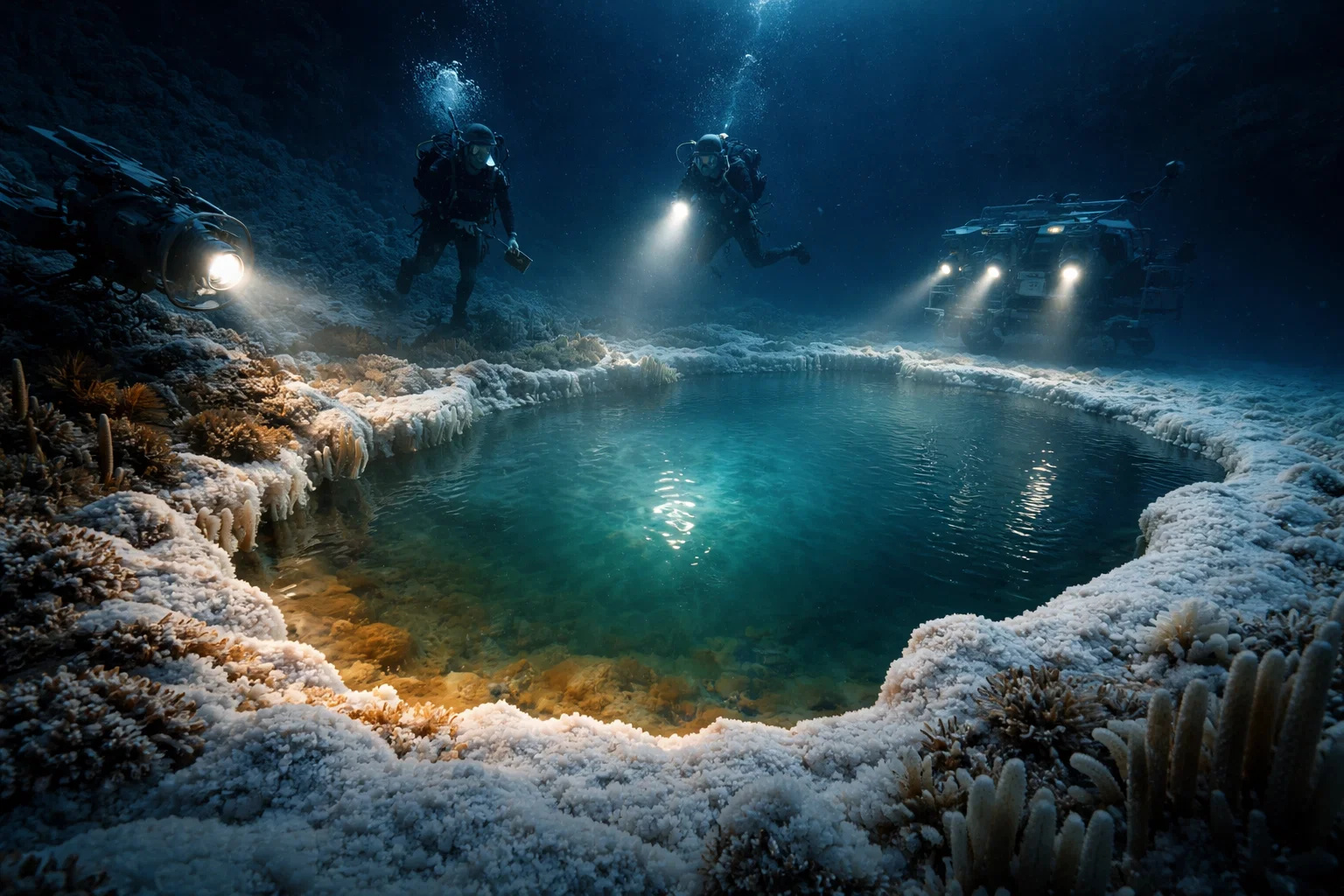

Phenomenon known as a toxic lake or brine pools on the seabed, in the Mediterranean Sea, reveals invisible risks and challenges the understanding of the limits of life on Earth
A little-known phenomenon has intrigued researchers: the so-called toxic lake on the seabed, which at first glance appears to be just ordinary water, but can be fatal to practically any creature. These formations have already been identified in regions such as the Gulf of Mexico and the Mediterranean Sea, always at great depths where sunlight does not reach and conditions are extremely hostile.
The environment draws attention for gathering unusual characteristics, such as high salinity and the presence of toxic compounds. This transforms the region into a kind of natural trap, where various organisms end up not surviving after crossing its edge, creating a scenario that impresses even specialists.
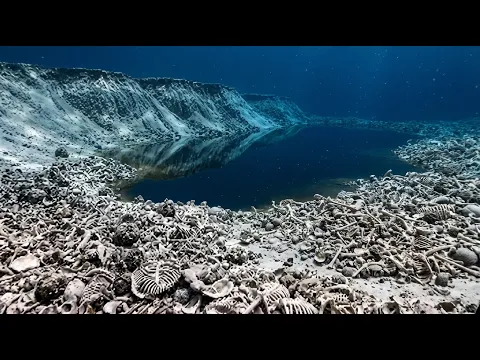

Scientists studying extreme marine environments report that the phenomenon represents one of the most extreme scenarios ever observed on the planet and raises new questions about the resilience of life in adverse conditions.
-
WHO Warns of Unnecessary Interventions in Natural Births Worldwide, Advocates for More Human-Centered Care, Reigniting Debate on Medicalization

-
World War II American Bombs Discovered in German City Prompt Evacuation of 20,500 Residents

-
World’s Largest Ice Cave Extends 42 km Beneath Austrian Alps, Revealing a Vast Frozen Realm Preserved by Natural Air Currents

-
Volcanic Soils from Destructive Eruptions Turn into Million-Dollar Crops: Ashes Nourish Grapes in Lanzarote, Bananas in the Canary Islands, Blood Oranges on Mount Etna, and Cacti in Mexico, Showcasing How Lava-Formed Lands Sustain Rare Harvests in Seemingly Barren Regions


Toxic lake on the seabed forms a kind of water within water
The so-called toxic lake on the seabed forms when a mass of extremely salty water accumulates on the ocean floor. Being denser, this water does not mix with the rest of the ocean, creating a visible separation.
This effect gives rise to a well-defined surface, resembling a traditional lake, with clear edges and even internal movements. The appearance can be deceiving, as the location seems stable and harmless at first glance.
Scientists, a team involved in underwater expeditions and geological studies, highlight that this phenomenon occurs in deep and hard-to-access regions, making its observation even more challenging.
Why this environment can eliminate any creature
The main risk lies in the chemical composition of the location. The water of this lake has high levels of substances such as hydrogen sulfide and methane, which are highly toxic to most living beings.
Moreover, the amount of available oxygen is extremely low. Upon entering this environment, an organism can quickly suffer from oxygen deprivation and poisoning, which explains the presence of various bodies around the edges.

The brine pools on the seabed function, in practice, as a lethal zone. The transition between ordinary water and brine occurs abruptly, making any escape reaction difficult.
Extreme life survives on the edges of this deadly lake
Even in such hostile conditions, some forms of life manage to adapt. The secret lies in microorganisms that use toxic compounds as a source of energy.
These bacteria thus allow the formation of an ecosystem based on chemical processes, without dependence on sunlight. This type of environment supports a food chain completely different from the pattern found on the surface.
Scientists, a group analyzing extremophiles and marine ecosystems, observe that some species can live close to the edge of the lake, taking advantage of the resources generated by these bacteria.
Formation is linked to ancient salt deposits underground
The origin of the toxic lake on the seabed is thus associated with geological processes that occurred over millions of years. Ancient seas evaporated and left large layers of salt deposited underground.
Over time, this material was pressed and displaced within the Earth’s crust. In certain regions, the highly concentrated salt ends up emerging and accumulating on the ocean floor.
This dense brine behaves like a separate liquid, forming underwater lakes. In some cases, these structures exhibit internal movements and even areas that resemble well-defined edges.
Environment holds clues about Earth’s history
These lakes also function as a natural record of the past. Since the water does not easily mix with the surrounding ocean, sediments are preserved for long periods.
This material may contain important information about ancient environmental transformations, changes in the oceans, and other relevant events in the planet’s history.
Moreover, the conditions found in these environments are similar to those of Earth in its early stages, when there was little presence of oxygen and aggressive chemical compounds predominated.
Toxic lake on the seabed may help understand the origin of life
The existence of life in extreme conditions raises an important hypothesis: environments like this may have served as a basis for the first forms of life on Earth.
These organisms show, therefore, that it is possible to survive using chemical reactions as a source of energy, without the need for sunlight. This broadens the understanding of where and how life can arise.
The toxic lake on the seabed also sparks interest in studies about environments outside Earth, as similar conditions may exist in other locations in the universe.
The phenomenon thus reinforces that there are still little-explored regions on the planet, with characteristics capable of surprising even the most experienced specialists. Even in extreme scenarios, nature finds ways to adapt.
At the same time, these lakes show that the ocean floor still holds mysteries that could impact scientific and technological knowledge in the coming years.
Have you ever heard of this type of lake on the seabed? Share this discovery and leave your opinion in the comments.