Portuguese
  Spanish


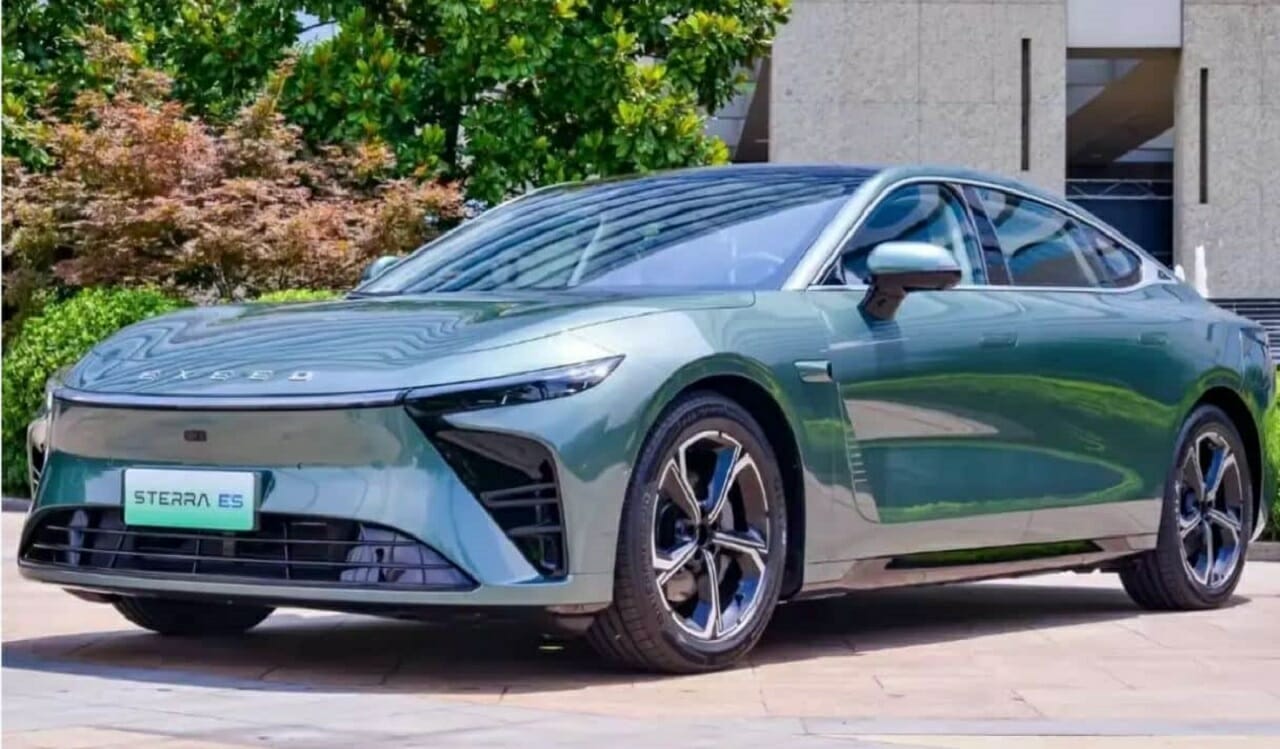

Chery’s Subbrand Launches New Luxury Electric Sedan That Promises to Rival BYD. The Electric Car Comes in Several Versions, One of Which Delivers Up to 700 km of Range.
Few brands focus on the national electric vehicle market as much as the Chinese. While some traditional companies take longer to bring new models, brands like Caoa Chery are heavily betting on their presence in the Brazilian market. Proof of this is the new Chinese electric sedan that hadn’t been launched in other countries but had its registrations already anticipated in Brazil.
Electric Car with 700 km of Range Features Several Cutting-Edge Technologies Inside
Caoa Chery has several sub-brands, including the luxury division Exeed and now the sub-brand Sterra, which also carries the Exeed name. One of the company’s first launches is the Chinese Electric Sedan Exeed Sterra ES.
Before it was unveiled, the electric car was called E03, and its design reached the public early through patents registered at the National Institute of Industrial Property (INPI). The vehicle is large, measuring 4.945 m in length, 1.978 m in width, 1.467 m in height, and 3 meters in wheelbase. Its design features a raised front formed by fluid lines.
-
Chery Offers Lifetime Battery Warranty and Car Replacement for Major Failures Under New Chinese Regulations

-
Sales of Brazil’s Cheapest Electric Car Halted Before First Deliveries: E-Motors Suspends Emova Easy Due to Import Tax Increase and Rising Freight Costs

-
Nissan Discontinues Qashqai SUV Amid Cost-Cutting, Chinese Competition, and Product Line Review
-
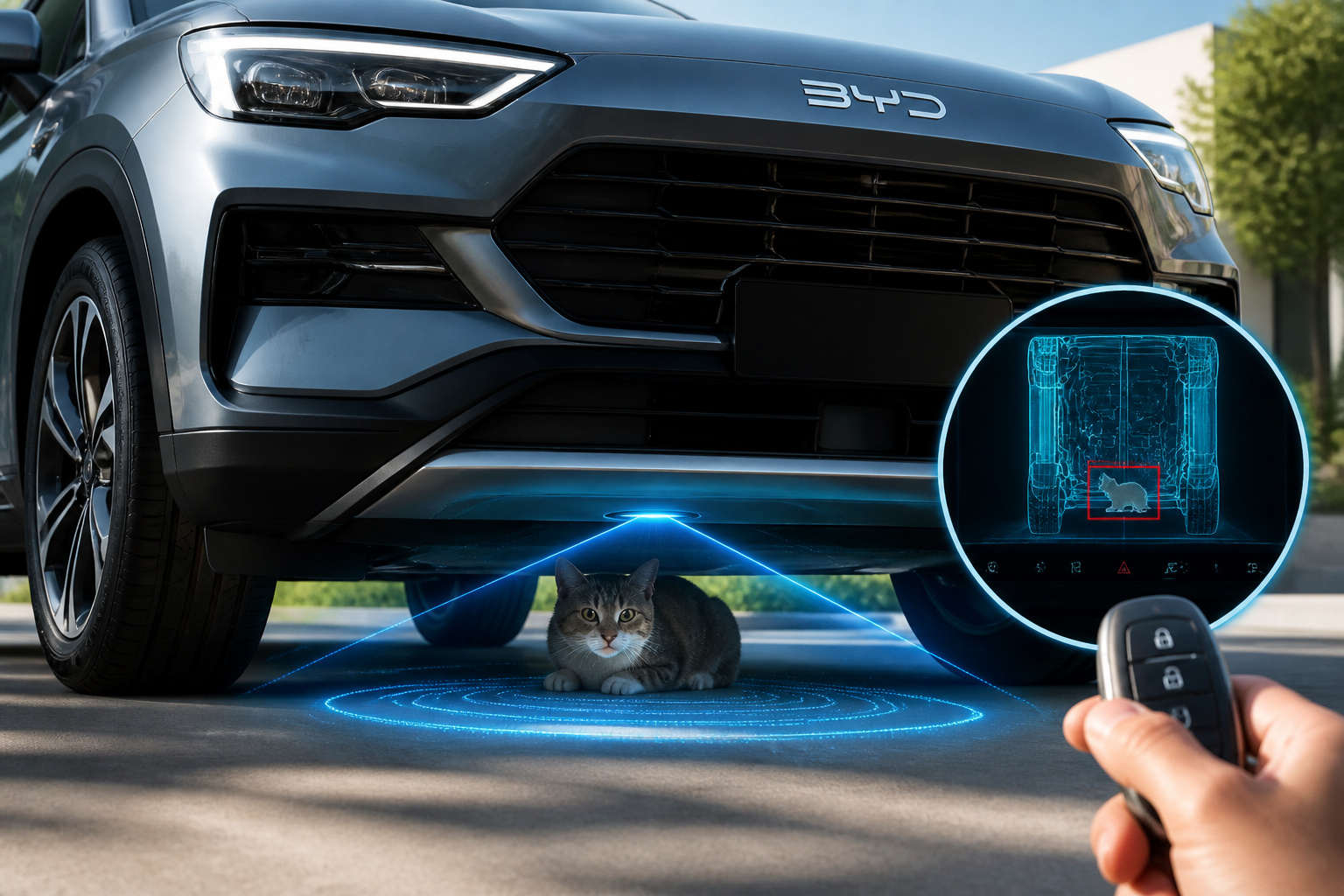
BYD Patents Revolutionary System Using Computer Vision to Detect Animals Under Cars Before Starting, Preventing Tragedies


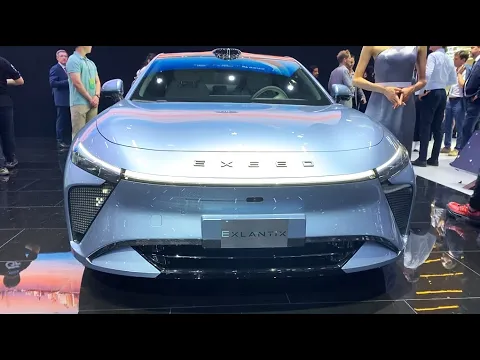

Inside the electric sedan, the lines are more angular, highlighting the extensive console, the leather-wrapped steering wheel, the nearly 16-inch multimedia center, and a 12.3-inch LCD instrument panel.
The operational system for the technologies is provided by Huawei, with Harmony OS. The model surprises the market with its modern design, comfort, and elegance characteristic of premium vehicles, but this electric car also attracts attention for its excellent performance.
Chinese Electric Sedan Delivers Up to 720 km of Range
Initially, buyers can choose from three battery options: 60 kWh, 100 kWh, and 80 kWh, with range varying from 500 km to 720 km. The powertrain also varies according to the range.
The 230 kW motor with lithium iron phosphate battery from CATL delivers 313 horsepower. Meanwhile, the 185 kW motor, paired with a BYD Blade battery, is capable of generating 252 horsepower. The 230 kW motor with lithium iron phosphate battery from CATL also delivers 313 horsepower.
The version with two motors of 123 and 230 kW has lithium ternary and lithium iron manganese phosphate batteries from CATL. According to the Chinese brand, the Chery electric car features a fast charging platform that allows for a 150 km charge in just 5 minutes. Initially, the energy consumption is only 11.7 kWh.
Electric Car Could Compete with BYD Seal
Despite the documentation, it is not clear when the luxury sedan will arrive in Brazil, but it is likely to be this year with a focus on competing with the BYD Seal.
The BYD vehicle is developed on the same platform as the Dolphin. Its dimensions are 4.80 meters in length, 1.46 in height, 1.87 in width, and 2.92 in wheelbase, and the version selected for the national market is equipped with two electric motors, one on each axle. Together, the motors deliver a combined power of 523 horsepower and a torque of 68.3 kgfm.
The Chinese sedan features an 82.5 kWh battery that enables acceleration from 0 to 100 km/h in just 3.8 seconds. The range estimated by the Chinese manufacturer is 650 km, a number that will change with Brazil’s new measurement standards.