Portuguese
  Spanish


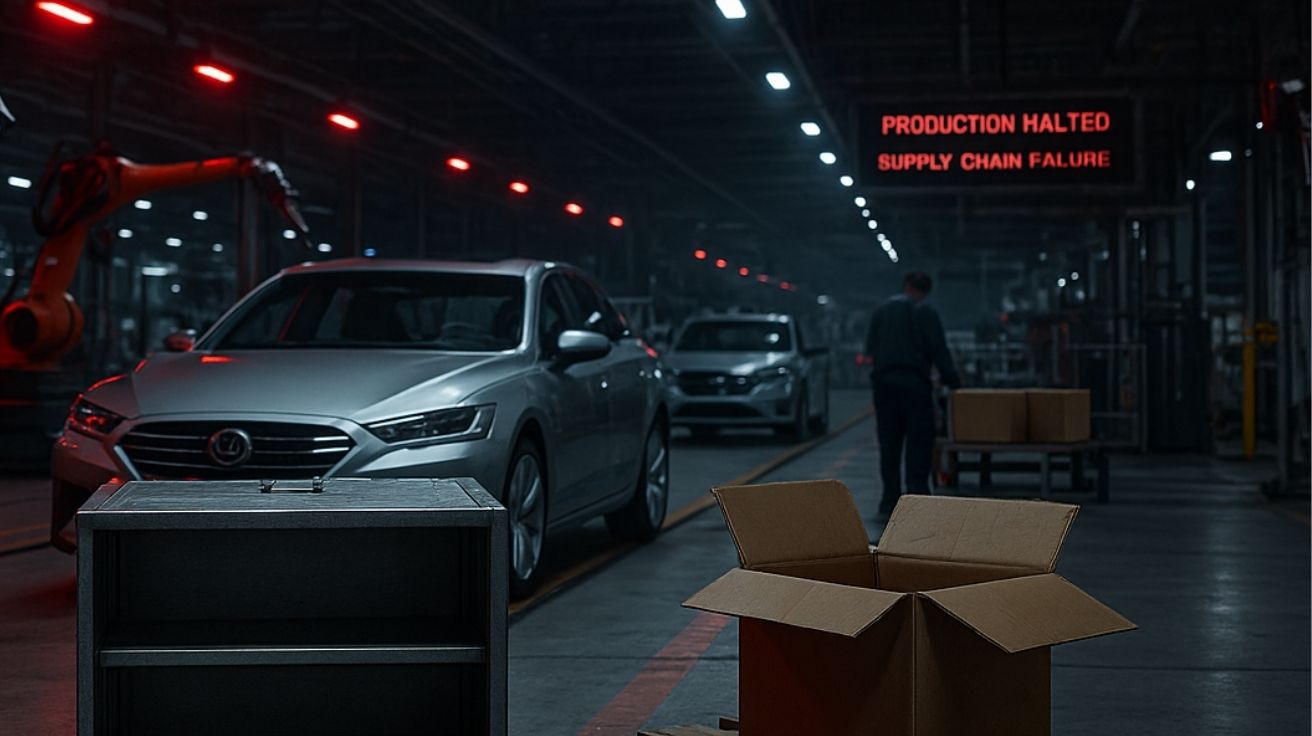

Electric Car Manufacturers And Combustion, Like Mercedes, GM And BMW, Face Drastic Bottleneck In Supply Of Magnets, With Real Risk Of Factories Stopping Due To Lack Of Critical Parts
The global automotive industry is on high alert. The president of a German magnet manufacturer reported that major automakers are “willing to pay any price” to secure supplies of rare earth magnets, essential components for modern cars. Reuters revealed that the bottleneck in China’s exports could lead to factory shutdowns as early as July, reigniting fears of a new global production crisis.
The shortage comes amid restrictions imposed by Beijing on the export of rare earth magnets, used in hundreds of automotive parts. With the recent history of crises caused by semiconductors and the pandemic, automakers are now facing an unprecedented logistical challenge, with few viable alternatives in the short term.
The Silent Collapse Behind The Doors Of Automakers
The crisis is not hypothetical. Automakers and suppliers have already initiated shutdowns in Europe, while dozens of other factories report critical stocks of magnets by the end of July. “The entire automotive industry is in total panic,” said Frank Eckard, CEO of Magnosphere, in Germany, who has received dozens of calls from desperate executives.
-
Sales of Brazil’s Cheapest Electric Car Halted Before First Deliveries: E-Motors Suspends Emova Easy Due to Import Tax Increase and Rising Freight Costs

-
Nissan Discontinues Qashqai SUV Amid Cost-Cutting, Chinese Competition, and Product Line Review

-
BYD Patents Revolutionary System Using Computer Vision to Detect Animals Under Cars Before Starting, Preventing Tragedies

-
Study Reveals Why Cars Are More Expensive to Produce and Buy in Brazil Compared to Mexico, Highlighting Taxes, Logistics, and Industrial Costs as Key Factors.



The root of the problem lies in the dependence on China. The country dominates 70% of global rare earth mining, 85% of refining capacity, and 90% of the production of metal alloys and magnets, data confirmed by consulting firm AlixPartners.
Each electric car modern uses about 0.5 kg of these elements. Combustion models use roughly half of that, which still represents a considerable dependence. These materials are present from motors and speakers to fuel and brake sensors.
After the chaos caused by the chip shortage, which paralyzed automakers from 2021 to 2023, companies promised to diversify their supply chains. But, as Eckard points out, “no one learned from the past.”
Unlike semiconductors, rare earth magnets are harder to replace or replicate efficiently. Alternative solutions, such as rare-earth-free magnets, are still in the early stages and far from being produced at viable scale.
Meanwhile, giants like GM, BMW, and Stellantis are trying to develop motors with less or no rare earth content. Some startups like Niron in the U.S. have raised as much as US$ 250 million to invest in alternative solutions, but production at scale is only expected by 2029.
The European Union has approved laws to boost local mining and refining with the Critical Raw Materials Act, but analysts say actions are not happening quickly enough. Heraeus, a magnet recycling company in Germany, operates at only 1% of capacity due to a lack of competitive demand against China.
The final alert comes from supply chain analysts: this bottleneck may just be the beginning. According to a 2024 report from the European Commission, China also controls over 50% of the global supply of manganese, graphite, and aluminum, all essential for cars and batteries.
The trend is that if the situation worsens, automakers may be forced to manufacture incomplete cars and park them until components arrive, as happened during the height of the chip crisis. Mercedes-Benz is already in negotiations with suppliers to build emergency stockpiles.
What Are Rare Earth Magnets?
Rare earth magnets, also known as neodymium magnets, are components produced from chemical elements of the rare earth group, such as neodymium, dysprosium, and praseodymium. These magnets are extremely powerful and efficient, being up to ten times stronger than standard ferrite magnets. This high magnetic strength allows them to be used in compact, high-performance devices such as electric motors, automotive sensors, wind turbines, hard drives, and even medical equipment.
In the automotive sector, they are essential for the operation of electric motors, speakers, windshield wipers, brake sensors, and dozens of other modern systems. The problem is that the extraction, refining, and production of these magnets are complex and highly concentrated in China, making the supply chain vulnerable to geopolitical restrictions, such as those currently occurring.