Portuguese
  Spanish


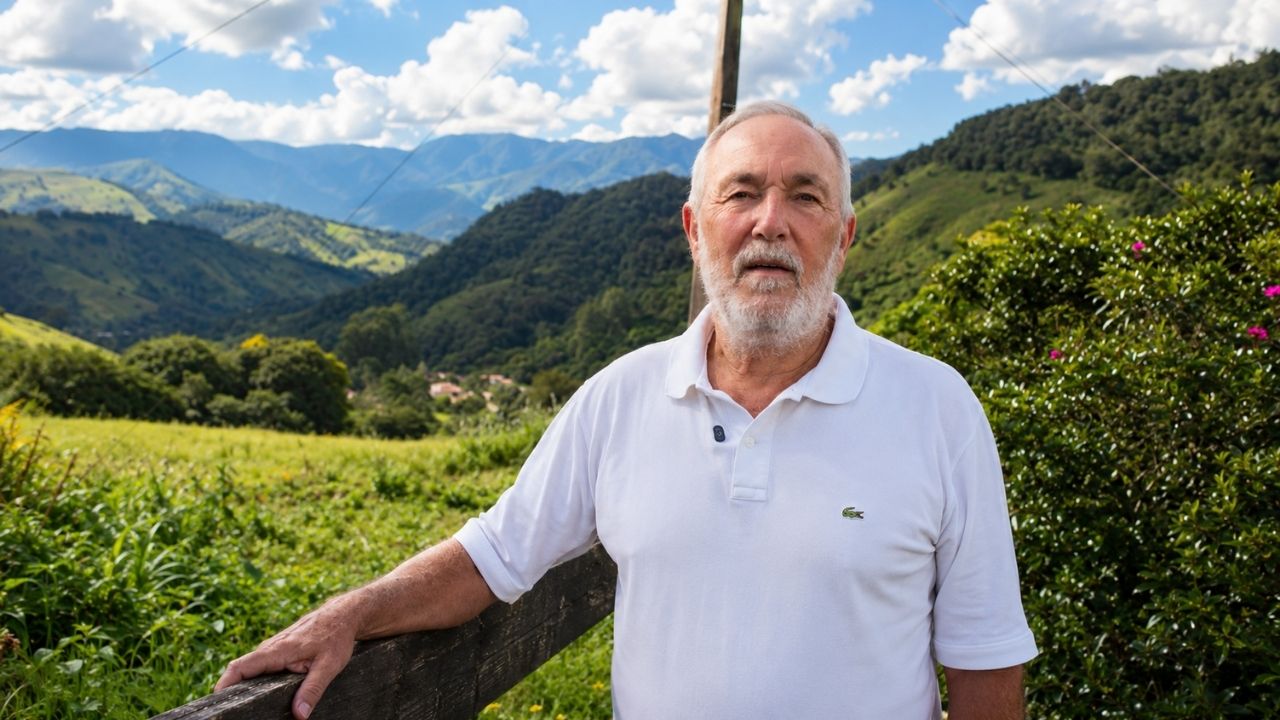

In Alagoa, in the south of Minas Gerais, at more than 2,000 meters of altitude, Mr. Jair, 78 years old, has been running an artisanal cheese factory in the Serra do Condado for almost half a century. The water comes from a spring for 800 meters and the “pingo” is the secret of the award-winning pieces.
On the top of the Serra do Condado, in Minas Gerais, a 78-year-old producer runs a cheese factory that has almost half a century of history. Mr. Jair’s routine was recorded by the Paulo Medeiros channel, in a video published on May 1, 2026, showing how he keeps a rare tradition alive in the south of Minas.
The factory operates in Alagoa, in a region over 2,000 meters high, where the water that supplies everything flows from a spring through about 800 meters of pipe. It is in this setting that the producer ages cheeses for up to two years and uses a simple ingredient, the “pingo,” as the secret behind pieces that have already won medals in competitions.
A cheese factory with almost half a century
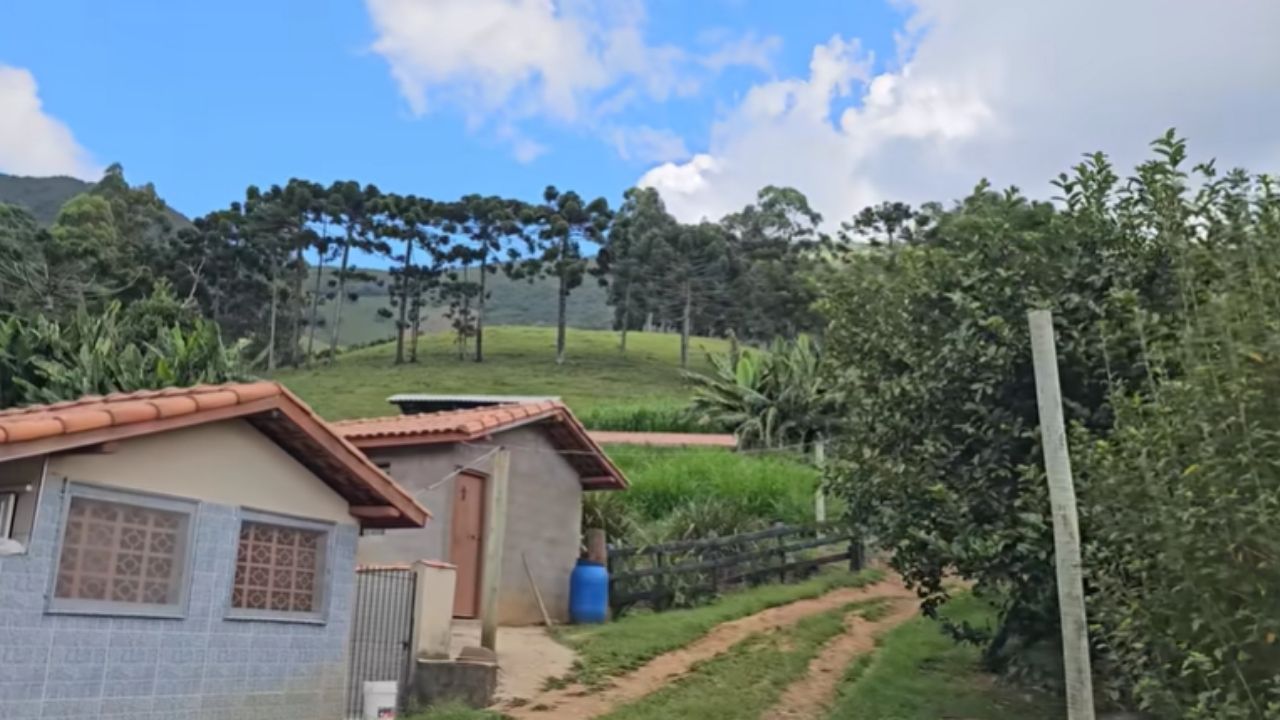
Time is present in every detail of the place. According to the producer, the factory is 48 years old, and much of the materials used there are old, including a vat that, he says, is about 85 years old and was the first to arrive in the region. The cheese mass is pre-cooked at around 45 ºC, in a process he has repeated for decades.
-
Driver Crosses 100-Year-Old Railway Bridge Over Uruguay River, Encounters Rural Couple Preserving Traditional Farming Methods

-
Rural Producer Returns to Brazilian Farmland, Builds Family Agricultural Business with Children’s Support and Industry Backing
-
Goiás Couple Boosts Artisan Cheese Production from 25 to 70 Kilos Daily with Technical Support, Transforming Family Life in Rural Brazil
-
13-Year-Old Discovers Ancient Roman Ring Near Mount Carmel, Now Set for Display in Jerusalem


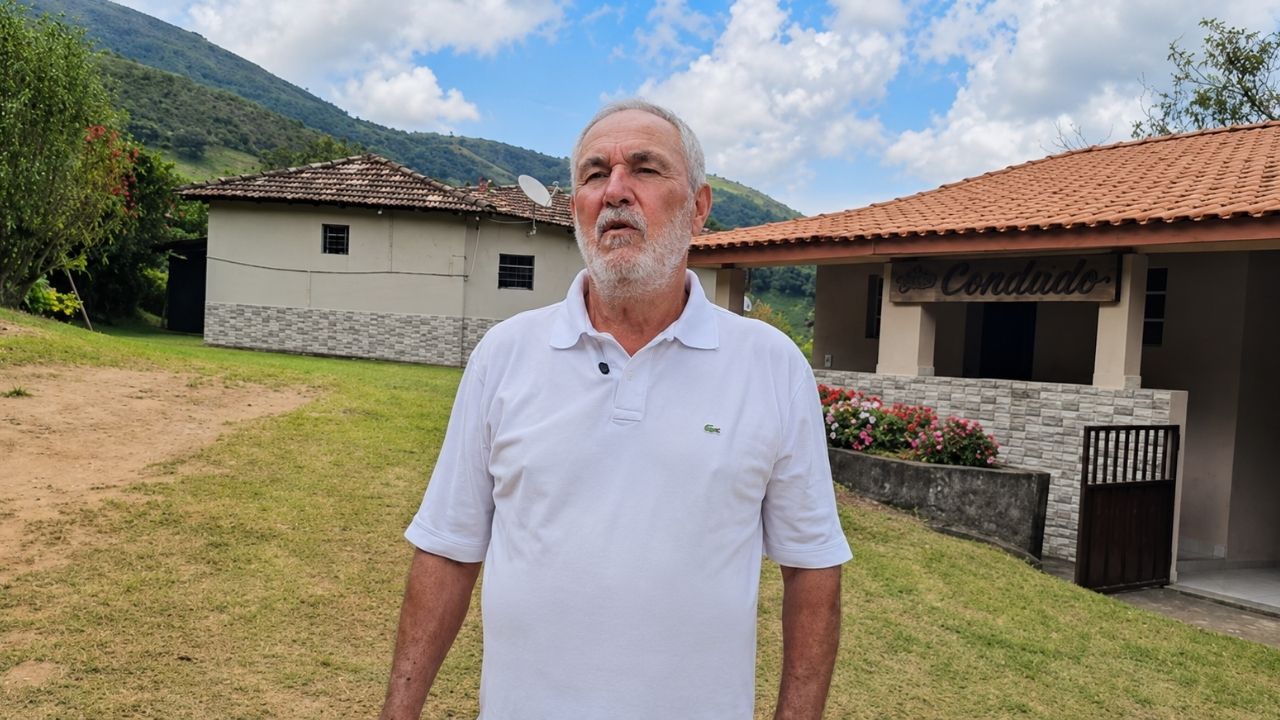
The construction itself carries this mark. Mr. Jair recalls that he built the structure with hardwood, like cinnamon, carried on the back of a donkey, at a time when access to the mountain was very poor. Keeping the factory running, high up and far from everything, is part of a life choice: he says he never wanted to leave the countryside.
The spring water, the “wealth” of the mountain
For the producer, the greatest wealth there is not the cheese, it’s the water. It flows from a spring through about 800 meters of pipe to the tanks that supply the house and the factory, and he ensures he drinks only this water. At 78 years old, he claims to have never had headaches or health problems, even working all day.
This abundance of clean water, at an altitude of over 2,000 meters, is what he points to as the heart of the property. With each tourist visit, the story repeats: many are impressed with the quality of the water that sustains the factory and the entire cheese production routine in the mountains.
The “pingo,” the secret behind the award-winning cheese
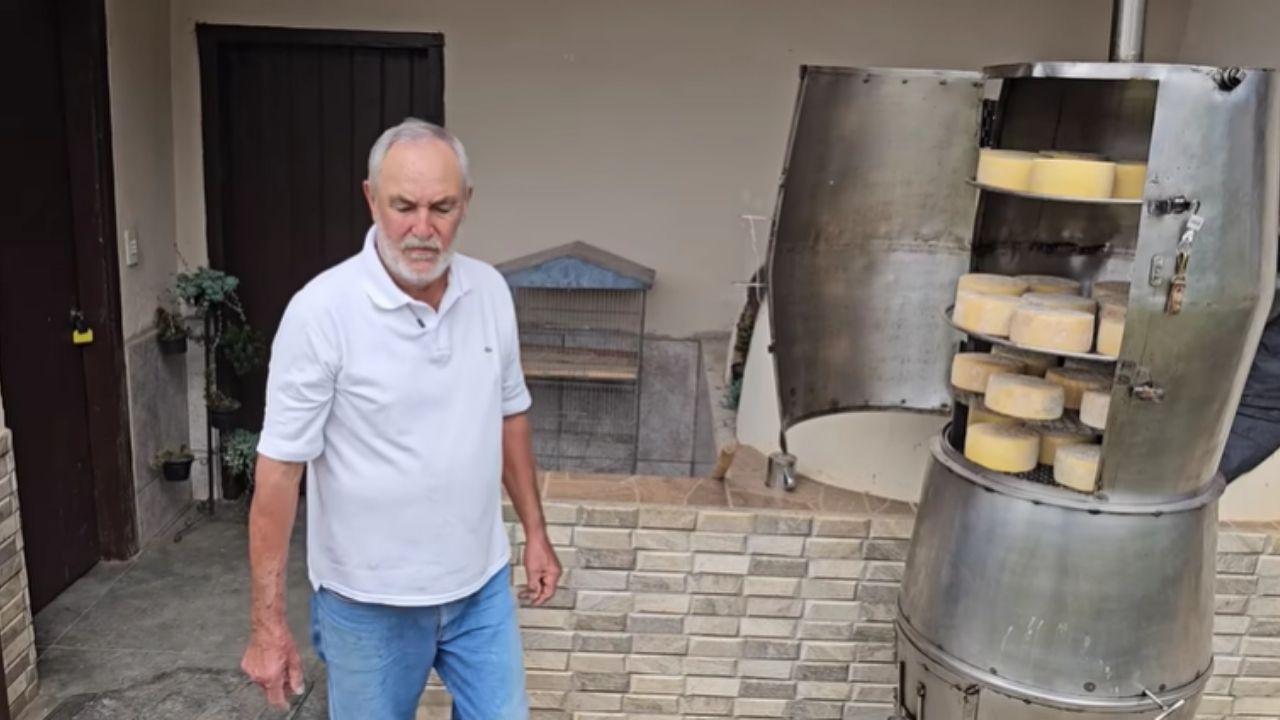
When asked about the secret of the cheese, the answer is straightforward. For Mr. Jair, the true “cheesemaker” is the pingo, the natural ferment taken from the cheese itself, used in the proportion of about 4% for every 100 liters of milk. He insists, with humility, that he does not consider himself the author of the magic, but merely the one who takes good care of this ingredient.
The technique also has its tricks. The producer explains that he breaks the curd slowly, so the fat stays in the cheese instead of being lost in the whey, and that a good ferment is what separates an ordinary piece from an award-winning one. It is this care that leaves the factory heading to competitions.
From 5 kg to the “black egg”: the many faces of cheese
The variety impresses visitors. From the factory come cheeses of 1 kg, half a kilo, and 5 kg, as well as smoked versions, the so-called “alliance cheese,” and his own creations, like the “black egg,” which he says he created in 2023. To smoke, he uses sawdust from eucalyptus trees planted on his own land.
There are also long-aged pieces. The producer shows cheeses with months of aging and others that, according to him, reach two years, with a dark rind and white mold, considered a good sign. Each shape and each point of aging leave the factory with a different destination, from the tourist taking a souvenir to the loyal customer.
Awards, tourism, and the queue of buyers
Recognition came with time. Mr. Jair claims to have started competing in contests in 2021 and since then has collected gold and silver medals, including in one of the most competitive competitions in the country, which gathers thousands of cheeses and dozens of judges. He also mentions having appeared in a television report even before competing abroad.
The movement at the door sustains the business. The producer says he has already received thousands of tourists over the years, with days when dozens of cars arrive at the mountain, and maintains old buyers in neighboring cities. Many people find him through the internet and social media, attracted by the labels and the fame of the cheese that comes from that factory in the middle of the woods.
The family and life in the countryside


The story of the cheese is also a family story. Mr. Jair is one of 14 siblings and says that his father once had two cheese factories in the region, where he learned the trade as a boy. Today, some of the siblings continue in the activity, and his son, Fábio, helps with the work and is building his own house nearby.
Not everything was easy. He recalls the times when almost everything was lacking, when clothes were sewn 20 kilometers away and the first pair of boots came only at 18 years old. He also shows the hand marked by an accident with a horse, which left him with sequelae but did not take him away from work. Even so, he assures that running the factory and living in the mountains is what he always wanted.
A factory that withstands in the high Minas mountains
The story of Mr. Jair shows how the artisanal cheese from Minas carries much more than flavor: it carries memory, patience, and a way of life that few still maintain. A factory of 48 years, powered by spring water and whey preserved for decades, is the kind of place that helps to understand why Minas cheese became a heritage.
Now we want to know your opinion. Would you pay more for a cheese made like this, with care and in the time of the mountains, or do you prefer everyday market cheese? Have you ever tried a real artisanal Minas cheese?
Comment below about your experience, tell us what your favorite cheese is, and share this article with those who love the food and traditions of the Minas countryside.